Comcross has spent 12 and a half years doing something increasingly rare in the audiovisual industry: building knowledge instead of chasing sales quotas.
"We don't want to sell and to push things, but we want to help," explains Gregor Daane, who joined the 15-person team a year and a half ago.
This philosophy recently earned them the Joan Innovation Award, recognition for companies finding innovative ways to help organizations work better, regardless of location. When you look at Comcross's vision statement, the alignment is clear. They research new opportunities and technologies to foster collaboration, building complete ecosystems rather than pushing individual products.
"That sounds like music to my ears," Daane says about the award. "We are investing in knowledge and in persons who can train, who can support, who can explain, who can lead a project."
We spoke with Daane about transforming a 50-room office with Joan room solutions and why asking questions matters more than throwing specs at customers.
What makes Comcross different
In a competitive market full of larger companies doing bigger deals, Comcross has carved out a distinctive position. They're not trying to be the biggest. They're trying to be the most helpful.
"There are companies that do more business than us, but they are pushing," Daane explains. "We don't want to push things. We are selling a solution that helps our customers, and that's the main thing."
This approach means taking the time to understand what customers actually need rather than what's easiest to sell. It means seeing themselves as architects of complete ecosystems rather than vendors of individual products.
The philosophy extends to their relationship with Joan. What Daane values most isn't just the technology itself, though the ePaper displays, Microsoft integration, and straightforward interface all matter. It's the partnership approach.
"It's not a complex solution that customers would end up not using," he says about Joan simplicity. "It's a straightforward, simple, and very good and effective solution."
When bright lights become a problem
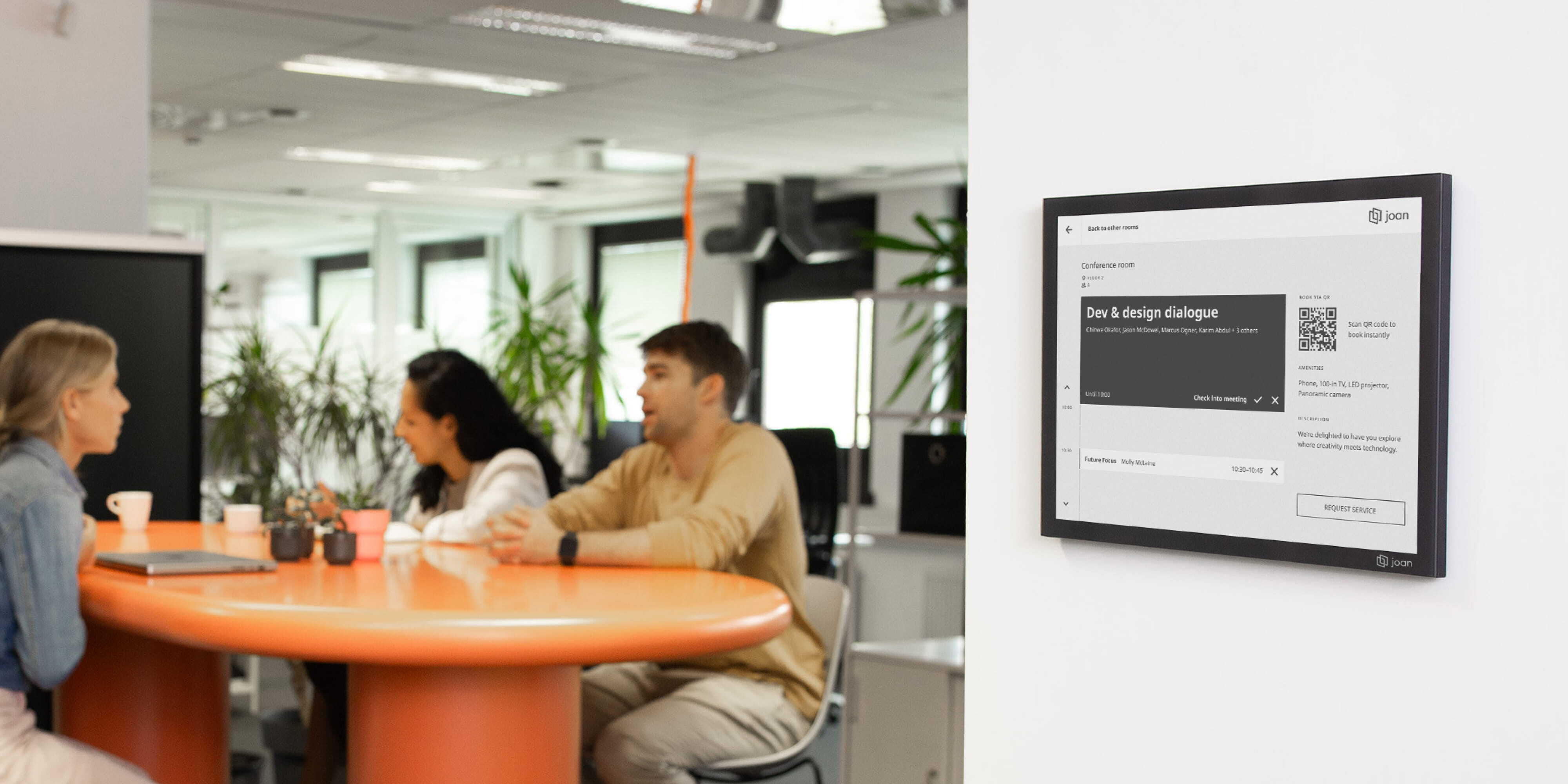
The project that would become Comcross's largest Joan deployment started with an unusual request. A customer needed to manage 50 meeting rooms, but they had a specific concern: some employees were sensitive to the constant glow of traditional LED screens.
"Oh, I don't want colored displays, LED displays outside of the meeting room because they have people in the organization who don't like that," Daane recalls. "They cannot handle the bright colors and stuff like that."
Before implementing any system, the organization was dealing with chaos. Without structure, meetings were constantly interrupted by people knocking on doors asking how long the room was needed or simply walking in on occupied spaces.
Asking questions before offering solutions
Daane's approach reveals what makes Comcross different. He didn't pitch a product. He asked questions.
"Most of the time, the customer is talking because I ask questions and I want to know what the needs are," he says.
The entire organization structures itself around expertise rather than transactions, investing heavily in people who can train, support, and lead projects. "We're selling knowledge," Daane notes. "For that knowledge we ask a fair price and we are not a kind of a web shop or something."
For this project, that meant understanding what the customer truly needed: effective collaboration, quiet spaces for confidential conversations, and displays that wouldn't bother people sensitive to bright LED lights.

The proof is in the adoption
Daane knew about Joan e-paper room booking displays from his previous work, but this would be his first Joan implementation.
"It was also kind of a test for myself that I sold an ePaper project for the very first time," he admits. "So I was also a little bit curious about how that would go."
The customer decided to approach the project in phases. Rather than deploying across all 50 meeting rooms immediately, they started with 20 rooms as a proof of concept. This gave them time to evaluate how people would actually use the system and whether it would solve their structural problems.
"How do people react to the system? Do they actually like to work with the system or not?" Daane explains the phased approach.
The answer came quickly. People loved it.
"It integrates into that organization very quickly, and it immediately becomes an easy way to book meeting areas or meeting rooms," Daane reports.
Last week, Comcross completed the second phase, installing Joan displays across the remaining 30 meeting rooms. The seamless integration with the company's existing Microsoft calendar system meant employees didn't need to learn new workflows. They just needed to book a room, and Joan handled the rest.
Growing an ecosystem, not just a product line
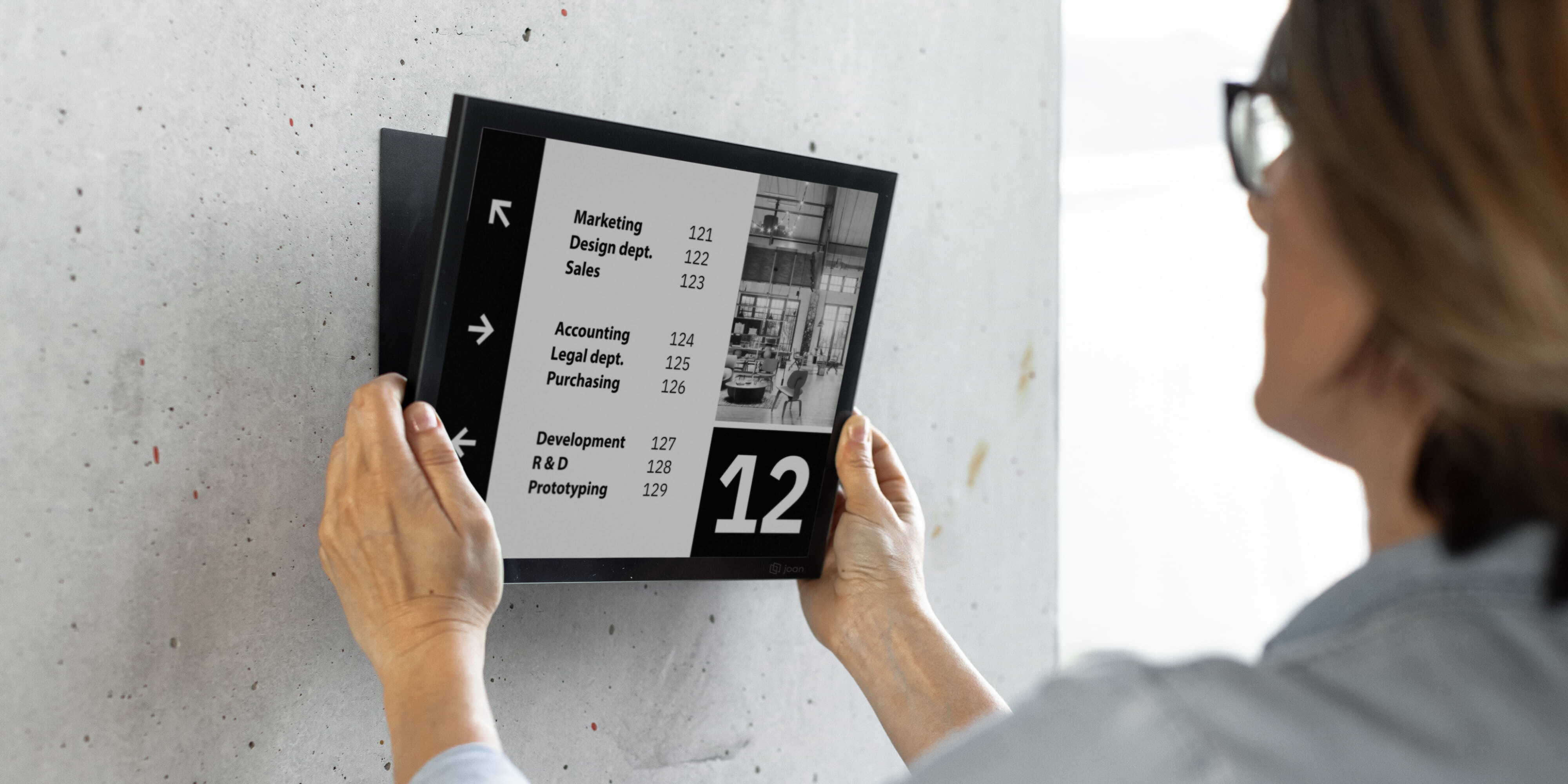
With the room booking system successfully deployed, Daane saw another opportunity. The customer needed digital signage.
"In the back of my head, I remembered that a part of the Joan ecosystem is also workplace digital signage," he explains.
The customer extended their Joan subscription to include workplace digital signage, mixing ePaper displays with LCD panels. They're now investigating visitor management for their main entrance.
"We love to start with one thing and then expand the ecosystem," Daane explains.
The return to the office
Comcross's experience reflects broader shifts in Dutch workplaces. According to Daane, most people have returned to in-person work.
This return isn't mandated. People are choosing to come back. "People need personal contact. They love to work together. They love to collaborate together," Daane explains.
Even government workplaces that had strict work-from-home policies during the pandemic are now encouraging office returns. This shift appears in customer requests. Demand for room management, digital signage, and visitor management continues to grow.
Daane also mentions an interesting new trend: parking space reservations, especially in cities like Rotterdam and Amsterdam where parking is scarce and public transport costs have doubled.
The business will follow
As Comcross continues growing its customer relationships and Joan expands its product ecosystem with new solutions like AI-powered workplace management, both companies are betting on the same philosophy: help customers solve real problems, and business will naturally follow.
"The business will follow if you want to help," Daane says simply.
It's an approach that's kept Comcross growing steadily for over a decade. And it's why their Joan Innovation Award feels less like recognition for a single impressive installation and more like validation of a fundamental belief about how business should work.
Ready to see how Joan can help your organization work better? Let's talk.
Insights that keep your office running smoothly
Fresh content on productivity, space management, and the future of work. Perfect for managers, admins, and busy teams.
Join thousands of workplace professionals who already read the Joan blog. Unsubscribe anytime.