Every year, Joan recognizes customers who don't just use workplace technology — they embody what thoughtful, people-first work actually looks like. This year's Sustainability Award went to BE-terna. We sat down with Timotej Osolin, Barbara Strniša, Sintija Hoareau, and Maja Šoba to hear the story in their own words. Here's what they told us.
Before COVID, BE-terna's offices made a simple promise: show up, and there's a desk waiting for you. There were more desks than people. Always. The ratio sat somewhere around 150%. Nobody had to think about it.
Then everything changed, and nobody went back to the way things were before.
BE-terna is a technology and consulting company with offices across Europe and a team that keeps growing. When the world shifted to hybrid work, they found themselves holding a building contract renewal and a question they hadn't had to ask before: Do we actually need all of this?
It wasn't a crisis. It was an opportunity — if they could figure out how to see it that way.
The whiteboard wasn't going to cut it
The Ljubljana office went first. That's where the question of desk management became concrete enough to do something about. They needed to understand how people were actually using space before they could make any decisions about it.
Timotej Osolin, who led the evaluation process, remembers it as a practical search more than a dramatic one. They were exploring options, talking to vendors, weighing features. The recommendation for Joan came informally — from one of their directors — and it landed because it fit the specific requirements they'd already mapped out. Floor plans were non-negotiable. IT provisioning had to work cleanly. And because BE-terna runs on Microsoft, they weren't looking for a room booking solution — Teams already handled that. They needed something that solved desk booking, and solved it well.
Joan did.
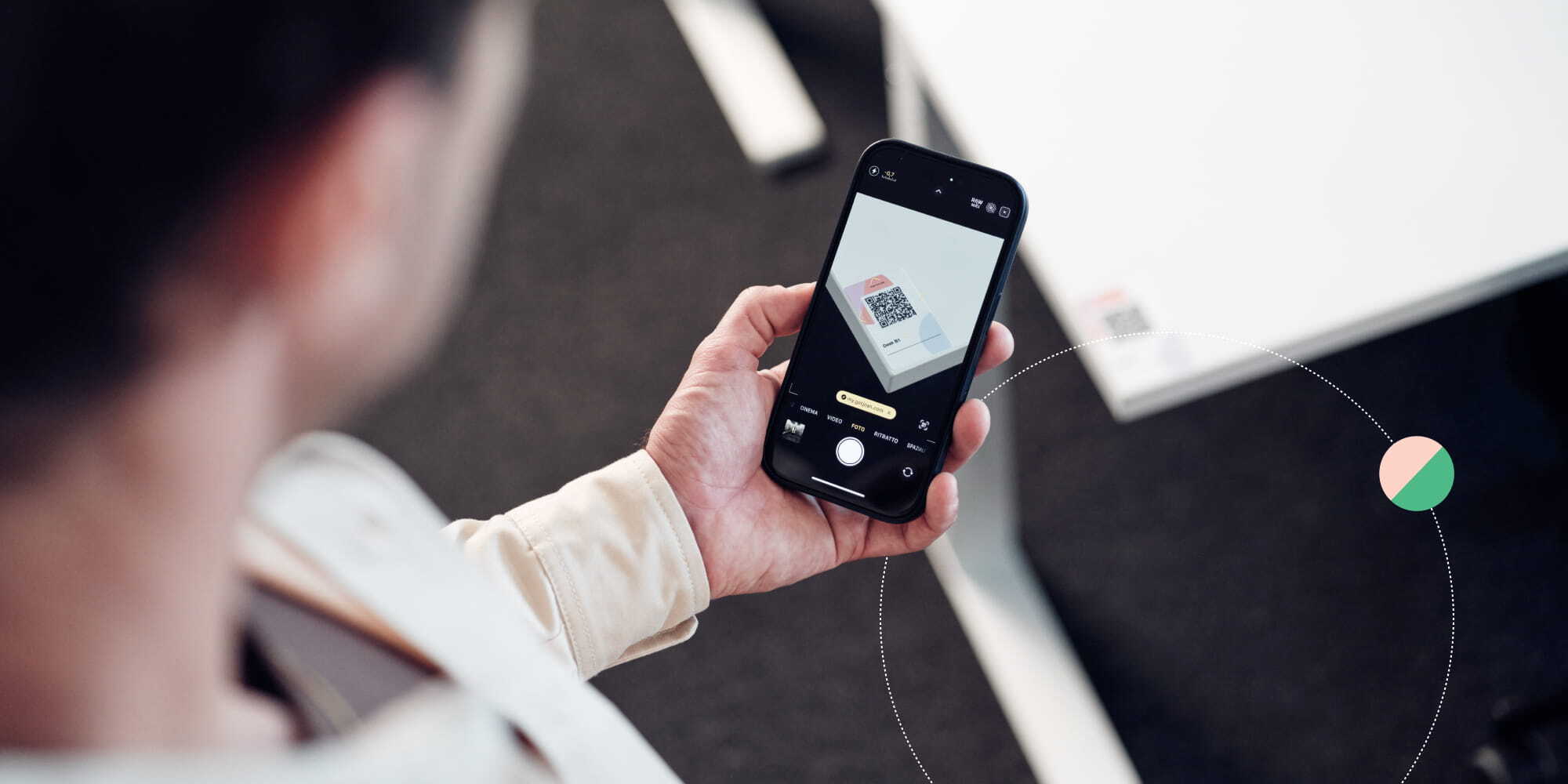
"The final decision was made because it was a very good price-performance ratio based on our requirements," Osolin explains. "It checked all the boxes."
The whole process — testing, approvals, implementation — took less than two months.
What it actually looks like
Sintija Hoareau is a solution consultant at BE-terna. She doesn't use the desk booking app every day, but when she does, she goes straight to the floor plan. It's the fastest way to know exactly where she's sitting and who's around her. Some days she sits with her team. Other days, if she needs to focus, she finds a quieter corner. The app makes that kind of small, personal decision effortless.
She doesn't use the automated check-in feature — she opens the app and checks in manually — but she's the first to acknowledge that anything that reduces friction is welcome.
"Anything that speeds up or lowers my workload," she says, "is of course very welcome."
That's a good way to describe what a workplace tool should feel like. Not transformative. Just quietly, reliably useful.
Fewer desks, better outcomes
Today, BE-terna has desks for roughly 80 to 90 percent of its workforce in Ljubljana and Leipzig. That's a deliberate reduction from the pre-pandemic surplus — achieved not by redesigning offices or tearing out meeting rooms, but by understanding how people actually worked and building a policy around reality instead of assumption.
A company-wide questionnaire asked employees how many days a week they expected to come in. Those who said three or more were offered a fixed desk. Everyone else got a floating one. Certain roles — designers in marketing, for instance, who rely on a specific hardware setup — kept permanent spots regardless.
What BE-terna didn't do was mandate anything."We don't have a rule that you need to be at the office a certain number of days," says Barbara Strniša. "It depends a little on your role and your lead, but we support people doing their best work where and when they work best."
The desk booking solution is live in Ljubljana and Leipzig. Innsbruck is being evaluated. The visitor management suite is on the roadmap, driven by security compliance requirements rather than novelty.
The part that's harder to measure
There's a thread running through everything BE-terna does that has nothing to do with office space. Two or three years ago, they started formalizing their commitment to sustainability — not with an external audit or a polished report, but with an internal document, a direction, and a set of values they wanted to hold themselves to.
Given the nature of their business, the focus has always been the social dimension of ESG. Encouraging women into technology. Building equal opportunities. Creating standardized learning paths for people at every level of the company. These aren't programs that live in a policy document — they show up locally, organically, in different ways across different countries. In Slovenia, the HR team organized a school supplies drive for children. When catastrophic floods hit, colleagues collected food for Anina Zvezdica.
Maja Šoba, who holds the overview of these efforts, puts it plainly: "We're not trying to tick boxes. Sustainability for us starts with people — our own team, and the communities around us. The social part of ESG is where we can genuinely make a difference, so that's where we focus our energy."
That's not a gap. That's what it looks like when sustainability is genuinely embedded rather than managed from the top down.

"When you're managing a hybrid team across multiple offices, the last thing you want is to be thinking about desk booking. Joan solved that problem so completely that we stopped thinking about it — which is exactly the point," Timotej Osolin says.
A shared vision
What makes BE-terna's story compelling isn't just the technology — it's the philosophy behind it. A company that values flexibility, invests in its people, gives back to its local communities, and makes thoughtful, economically sound decisions about its workplace is exactly the kind of organization that gets the most from tools like Joan.
We're proud to recognize BE-terna with the Joan Sustainability Award 2026, and even prouder to be a small part of how they're building the workplace of the future.
Insights that keep your office running smoothly
Fresh content on productivity, space management, and the future of work. Perfect for managers, admins, and busy teams.
Join thousands of workplace professionals who already read the Joan blog. Unsubscribe anytime.