There's a piece of advice that comes up in almost every conversation about product development:
Listen to your customers.
It's not wrong. But it's not the whole picture either. And I think the incomplete version of it has caused more product failures than it was supposed to prevent.
Here’s what I've actually learned when building products at Joan and why the story behind our ePaper badges confirmed that customer voice is not enough.
P.S. Let’s connect on LinkedIn!
Every product starts with a conviction
Before you have customers, before you have feedback, before you have a single data point, you have a hunch. Something you believe could exist, a gap you see that others haven't noticed yet.
That's not ego. That's the starting point of every product that's ever mattered.
Henry Ford said if he'd asked people what they wanted, they would have said a faster horse. That's not a permision to ignore your market. But it is a reminder that vision has to come first, otherwise, you're just transcribing requests.
At Joan, we've always started there. We look at what's happening in adjacent spaces, in technology that hasn't found its use case yet, in trends that aren't obvious to everyone. And we ask: what could we build with this?
That internal conviction was the first move. Not a customer request nor a market study. A gut feeling backed by our own expertise and a genuine belief that there was something there.
The moment conviction becomes a liability
Here's where it gets complicated.
Because the same conviction that gets a product off the ground is the exact thing that can kill it later. In other words, you believe in something so hard that you stop listening. And every piece of friction becomes something to push through rather than something to learn from.
That's when ego stops being an asset and starts being the problem.
The real skill in product development isn't having conviction. It's knowing when your conviction is a signal and when it's noise. Knowing when to stick with an idea and when to let the market tell you something you didn't expect.
For instance, with the ePaper badges, we went into ISE with a vision of what we thought we were building: a visitor management product. A cleaner, more sustainable alternative to the thermal printer that's been sitting at reception desks forever.
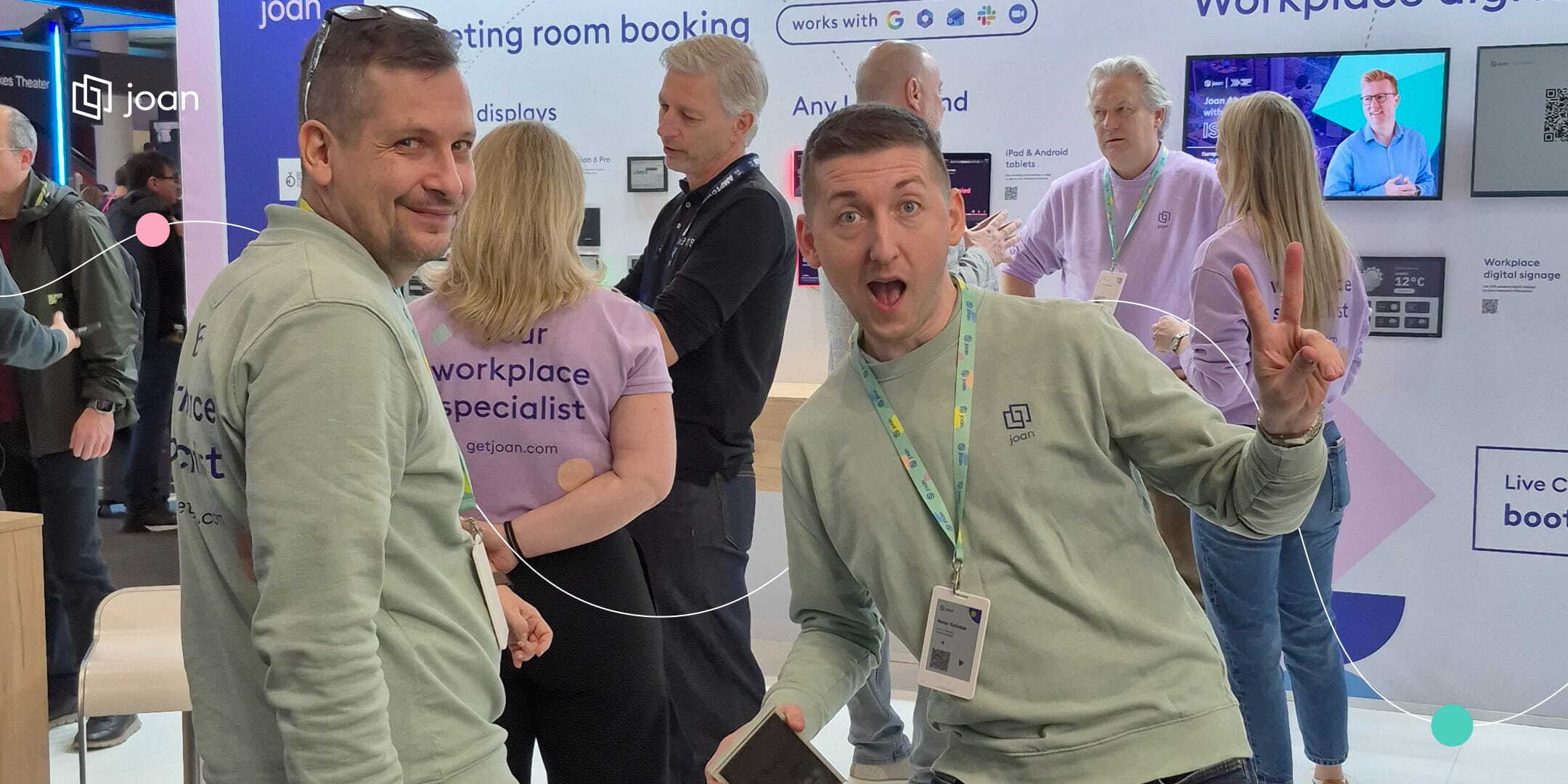
We came out with something much bigger.
The product Goldilocks zone
Visitors at our booth weren't just interested. They were excited in a way we hadn't fully anticipated. People who'd never thought twice about the printer at reception suddenly couldn't stop talking about it.
One customer said something that stuck with me. “Do you know how much paper we print just for visitors?” Not as a complaint but as a revelation. Something they'd accepted as inevitable suddenly had an alternative.
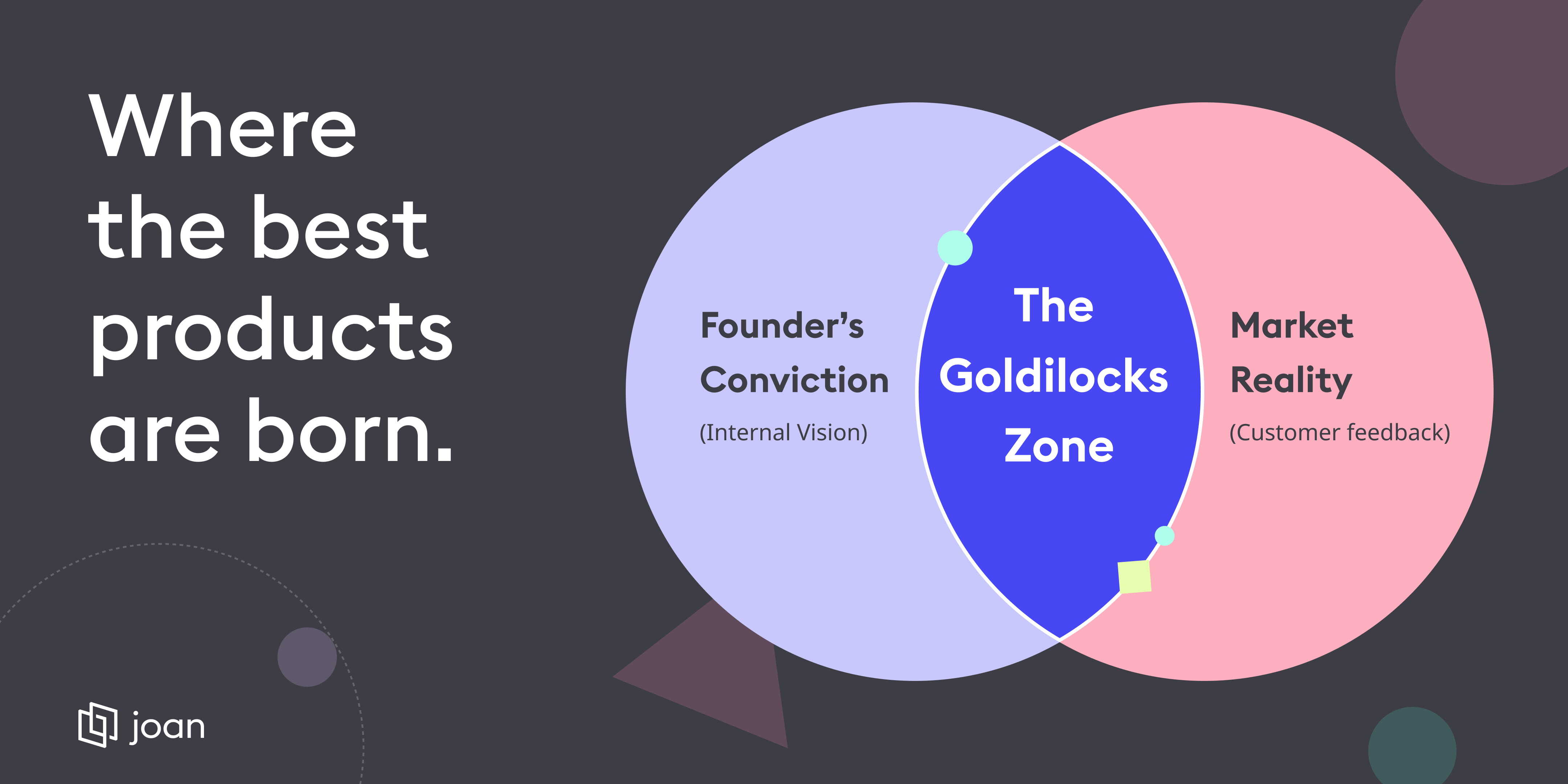
That's the goldilocks zone in product development.
When the market doesn't just accept what you've built, it starts selling you on why they need it.
But we only got there because we started with a vision, tested it, and stayed open to what came back. If we'd waited for customers to ask for a reusable ePaper visitor badge, we'd still be waiting. Nobody knew it was possible.
That's the Henry Ford problem in practice.
You can't ask for something you don't know can exist. But if we'd been so locked into our original framing that we couldn't hear what customers were telling us at ISE, that this was bigger than visitor management.
Taking the ego out of the equation
So what does good product development actually look like?
It starts with vision. It has to. But then it builds systems that make it hard for that vision to persevere despite market signals.
These are the steps we follow at Joan, and ones you can start replicating today:
- Log every piece of feedback. Not just the enthusiastic stuff. The hesitations, the "this is cool but..." moments, the questions people ask twice. Those are often more useful than the compliments.
- Run a reality check before doubling down. Before committing more resources to something, ask: how many customers have actually raised this? If the answer is "none besides the one conversation I keep thinking about," that's worth pausing on.
- Separate what people say from what they mean. When someone says "I need X," ask what problem X would actually solve. Often, the real issue is something you could address in a completely different way.
The companies that get product development right are the ones where the founder's conviction and the customer's reality are working together.
What the printer at reception was really telling us
The thermal printer didn't survive at reception desks for this long because everyone loved it. It survived because nobody had built a real alternative.
Customers weren't asking for a better badge because they didn't know a better badge was possible. The problem wasn't visible to them until the solution existed.
That's the part of product development that customer feedback alone can never give you. The problems people have accepted so completely, they've stopped seeing them. That shift doesn't happen without the initial vision. And it doesn't get that big without letting go of it at exactly the right moment.
If you're one of those people, if you walked past your reception desk recently and thought there has to be a better way, you can be among the first to get Joan ePaper Badges.
P.S. You can now also follow my product, sustainability, and workplace insights on LinkedIn. Let’s connect!
About the author

Insights that keep your office running smoothly
Fresh content on productivity, space management, and the future of work. Perfect for managers, admins, and busy teams.
Join thousands of workplace professionals who already read the Joan blog. Unsubscribe anytime.