Companies invest heavily in their workplaces: new collaboration tools, office redesigns, employee experience programs. Yet 91% of corporate projects run over budget. They're spending without strategy, and it shows.
I want to help you fix that. This newsletter shows you how to turn your workplace budget from a cost center into something that actually delivers.
Over the past two newsletters, we covered planning and implementation for workplace roadmaps. This week, we tackle the part most leaders skip. How much workplace transformation actually costs.
Because without a realistic budget, your workplace roadmap is just a wishlist.
Oh and speaking of strategic planning. We just wrapped our keynote walking through what's next for Joan's platform. If you missed it, you can catch the recording here.
Budget breakdown and priorities
Let's be honest, you can't fund everything at once. Even if you could, you shouldn't.
Trying to transform your digital tools, redesign your office, and overhaul your employee experience simultaneously is a recipe for disaster.
Start by revisiting what you defined back in newsletter two. What are you actually trying to achieve? What matters most right now?
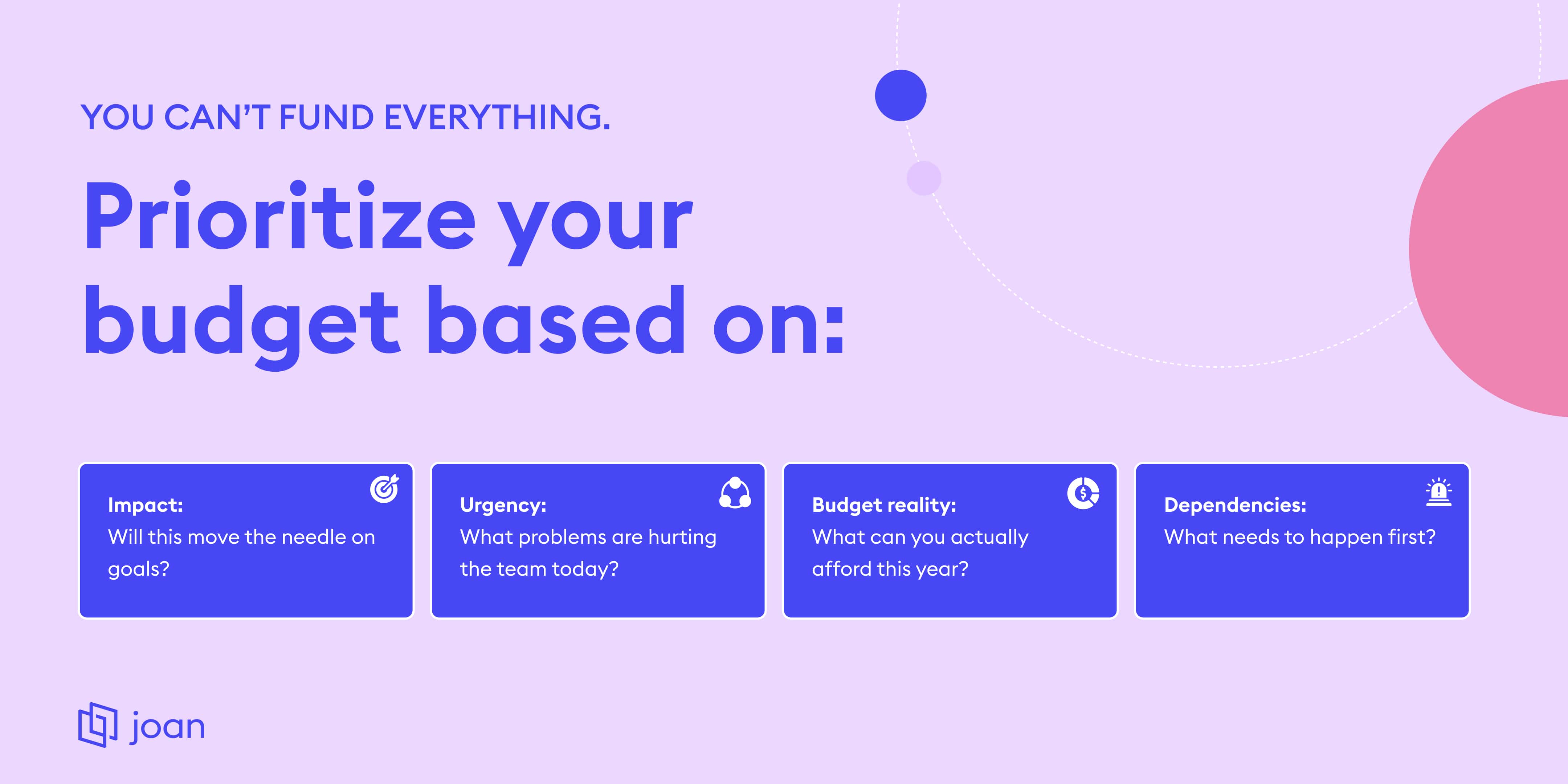
Then prioritize based on:
- Impact: Which initiatives will move the needle on your goals?
- Urgency: What problems are actively hurting your team today?
- Budget reality: What can you actually afford this year?
- Dependencies: What needs to happen first before other changes can work?
Break your budget into the same three phases we discussed for implementation:
- Short-term (0-3 months): Quick wins that don't break the bank. These build momentum and prove you're serious about change.
- Mid-term (3-12 months): Foundational improvements that require real investment but deliver lasting impact.
- Long-term (12+ months): Major transformations that need careful planning, significant resources, and executive buy-in.
Now let's break down what each pillar actually costs.
Pillar 1: Digital tools and infrastructure costs
Your digital workplace includes everything from Slack and Teams to your booking systems, project management tools, and IT backbone.
Between communication platforms, project management tools, collaboration software, and specialized applications, software costs can easily hit $8,000 per employee annually. And that's before you factor in implementation.
Here's what you need to budget for:
- Software licensing: Annual or per-seat costs for communication platforms, collaboration tools, booking systems, and productivity software.
- Implementation costs: Most enterprise tools require professional services to set up properly. Custom integrations, data migration, workflow automation. These aren't DIY projects.
- IT support: Ongoing maintenance, troubleshooting, and updates. Either internal team hours or external support contracts.
- Cybersecurity: Security audits, compliance tools, VPNs, endpoint protection. Non-negotiable, especially for remote work setups.
- System integrations: Making your tools talk to each other. API costs, middleware, custom development work.
Pro tip: Build in 15-20% contingency here. Software implementations almost always cost more than quoted.
Pillar 2: Physical space redesign and transformation costs
Your physical workplace is where things get expensive fast. Office changes involve real construction, real furniture, and real downtime.
For a 100-person team with an average office size, you're looking at roughly $600,000 per year in rent, utilities, and maintenance alone. That's about $6,000 per employee just to keep the lights on.
Budget for:
- Design services: Architects, interior designers, workplace strategists. Unless you're making tiny tweaks, you'll need professional help translating your vision into actual floor plans.
- Construction and renovation: Walls, electrical, HVAC, lighting, flooring. This is your biggest line item. Get multiple quotes and assume the highest one is closest to reality.
- Furniture and equipment: Desks, chairs, meeting room tables, lounge furniture, standing desks, monitor arms. Quality matters here because cheap furniture creates expensive problems later.
- Technology infrastructure: Meeting room displays (yes, like Joan), video conferencing equipment, cable management, power outlets.
Real talk: Physical changes always take longer and cost more than planned. Budget accordingly and communicate realistic timelines to your team.
Pillar 3: Employee experience and engagement program budget
This pillar covers the entire employee journey, from the moment someone interviews to the day they leave (hopefully many years later).
Here's what to fund:
- Learning & development platforms: Online training tools, course subscriptions, certification programs, conference budgets.
- Onboarding systems: Software to manage new hire processes, welcome kits, first-week experience programs.
- Wellbeing programs: Mental health support, fitness subsidies, wellness apps, meditation platforms, ergonomic equipment stipends.
- Recognition systems: Peer recognition platforms, awards budgets, team celebration funds.
- Career development tools: Performance management systems, career pathing platforms, mentorship program infrastructure.
The key here: Don't spread yourself too thin. Companies pour $95 billion into wellness programs, meanwhile employees still burn out and leave for better opportunities. Three well-funded programs beat ten underfunded ones.
Resource allocation and justification
Now comes the hard part, which is convincing leadership to actually fund this.
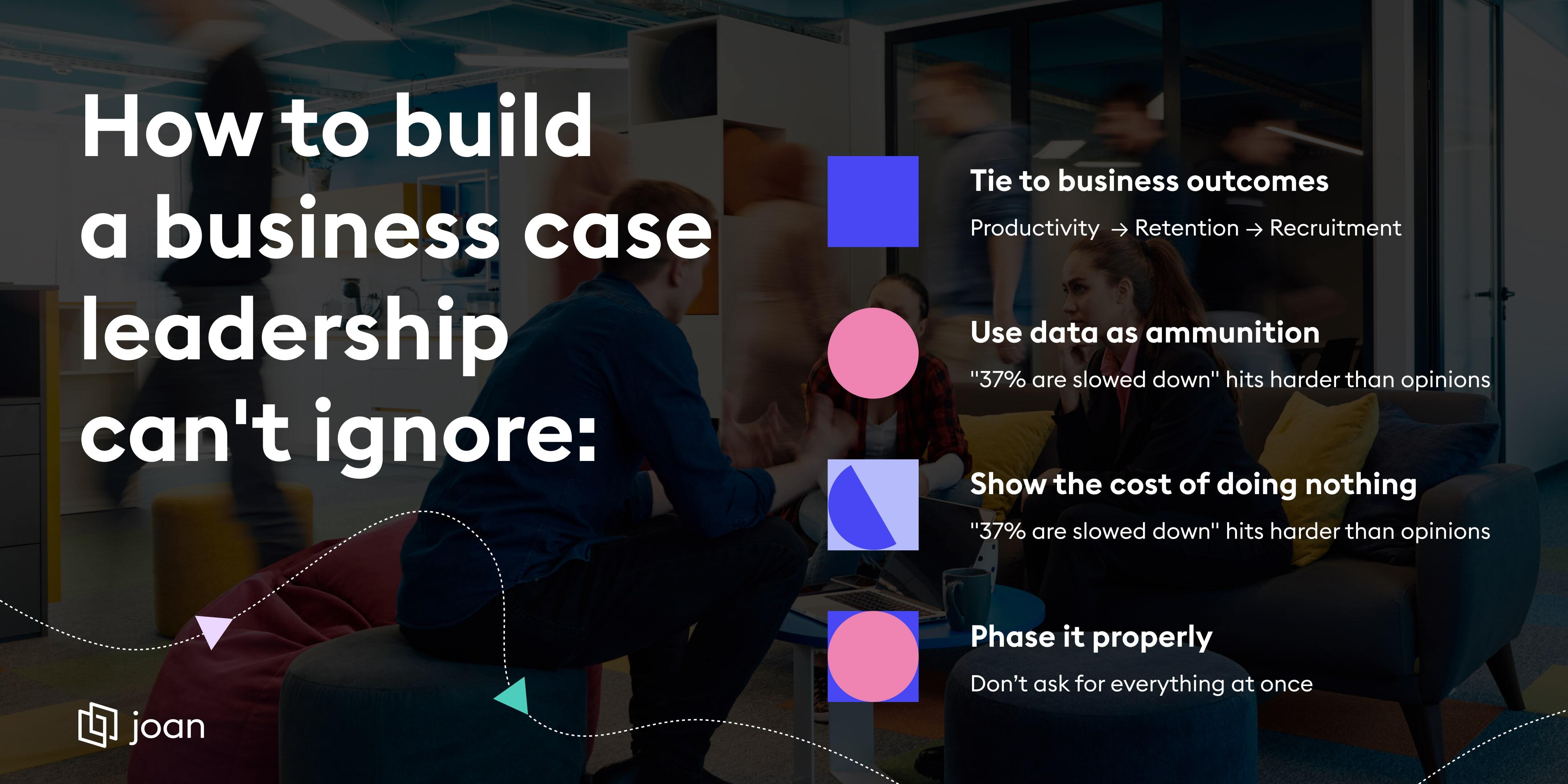
Here's how to build the business case:
Tie everything to business outcomes
Don't ask for a "nicer office" or "better tools." Show how these investments drive:
- Productivity gains: Better tools mean less time wasted on workarounds
- Talent retention: Good workplace experience keeps people from leaving (replacing employees costs 50-200% of their salary)
- Recruitment advantage: Modern workplace attracts better candidates
- Collaboration improvement: Proper spaces and tools make teamwork actually work
- Real estate optimization: Smart space planning can reduce square footage needs
Use your data from the planning phase
Remember those surveys, interviews, and usage metrics? That's your ammunition. "37% of employees say outdated tools slow them down" hits harder than "we should upgrade our software."
Show the cost of doing nothing
What happens if you don't invest? Turnover increases. Productivity drops. You lose talent to competitors with better workplace experiences. Quantify that.
Phase it properly
You don't need to ask for everything at once. Show a multi-year plan with clear milestones and expected returns at each phase.
Budgets that work in the real world
I've learned that trying to build a perfect budget is a waste of time. What works is building one that assumes things will go wrong.
Build a budget that accounts for delays, overruns, and the inevitable "we didn't think of that" moments.
And most importantly, track everything. Measure what your investments actually deliver. When you can prove that your $200K collaboration tool investment reduced meeting time by 20% or your office redesign improved retention by 15%, the next budget conversation gets a lot easier.
That's it for this series on workplace roadmaps.
Three parts: planning, implementation, and budgeting. The stuff that actually makes workplace transformation happen instead of just sound good in strategy decks.
If you want to see how we're thinking about workplace technology at Joan, check out the recording of our recent keynote.
See you in the next one.
About the author

Insights that keep your office running smoothly
Fresh content on productivity, space management, and the future of work. Perfect for managers, admins, and busy teams.
Join thousands of workplace professionals who already read the Joan blog. Unsubscribe anytime.