I ordered a coffee on the way to a client meeting last month. The app knew my name, my usual, and that I still hadn't used my birthday drink.
Starbucks had to know that. Not out of hospitality, but because if it didn't, I'd go next door. That threat forced recognition into the product. Thirty-five million loyalty members later, it knows things about us we don't even know ourselves.
Your office never faced that threat.
Nobody leaves because the sign-in sheet is a clipboard. So visitor management is still running the same process it ran in 2005, and most companies haven't noticed.
P.S. Let’s connect on LinkedIn!
Where the investment goes, and where it doesn't
Here's what I see repeatedly across the companies we work with: the Workplace Experience budget is real, and it's growing. An HR.com study found 78% of organizations recently increased their employee experience spending.
And none of those reaches the front door.
Most of that investment goes into software: intranets, collaboration tools, performance platforms. And while the digital layer gets smarter every year, the physical layer stays frozen somewhere around 1997.
And the gap shows.
A company can build a beautiful digital onboarding journey for a new hire and have their laptop ready on day one. Then their most important client walks in for a meeting and is met with a paper sign-in sheet and a generic lanyard that says "VISITOR”, or a one-time sticker that probably took two tries to print correctly.
Mystery shop your own front door
Here's the thing most companies don't realize until someone points it out:
You probably already have everything you need to recognize visitors.
It's in the calendar invite. It's in the room booking system. It's in the CRM. The information exists, it just never travels the last ten meters to the front door.
Which means the technology gap is narrower than people assume. The data is already collected, already structured, already sitting somewhere. What's missing is just the final connection.
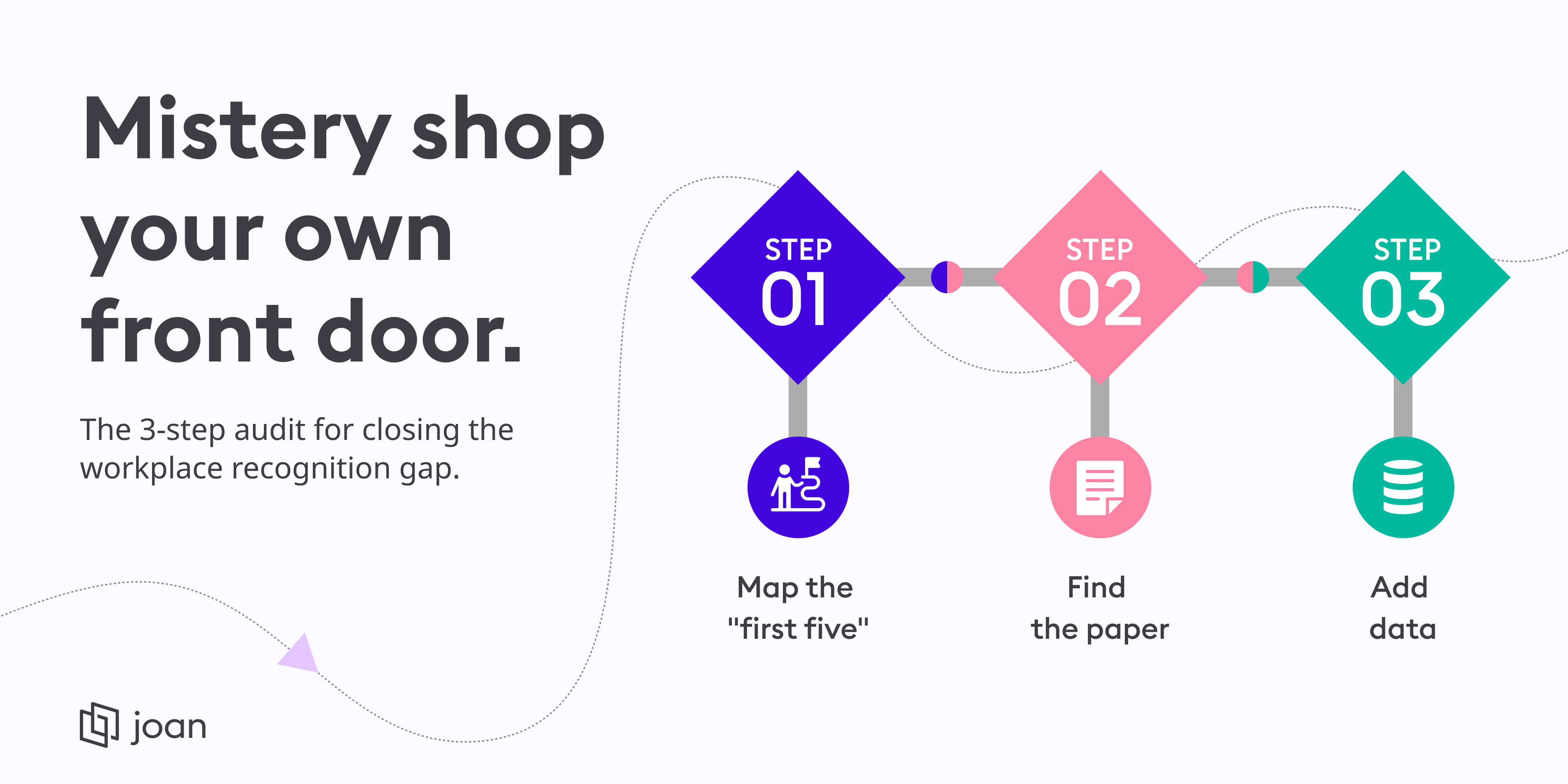
The best way to find yours is to walk through your own front door as if you've never been there before and:
- Map the first five minutes. Write down every physical touchpoint before you reach your point of contact. Sign-in sheet, badge, directions, digital signage.
- Find the paper. Somewhere in that first five minutes, there's still a clipboard, a printed sheet, or a lanyard with someone else's name on it. That's your starting point.
- Add data. Find where the personalization data sits. Your organization's calendar or a room booking system.
Then find the one missing connection. The technology that takes what's already in your systems and makes it show up at the front door.
The first object that knows you
We built the e-paper badge because we got tired of watching companies spend millions on experience and then hand visitors a sticker with a typo on it.
Somebody had to decide the front door experience was worth designing. We did.
And if you’re ready to close the missing connection problem, let’s talk! Simply reply to this email and we'll take it from there
See you in the next one, Luka
P.S. You can now also follow my product, sustainability and workplace insights on LinkedIn. Let’s connect!
About the author

Insights that keep your office running smoothly
Fresh content on productivity, space management, and the future of work. Perfect for managers, admins, and busy teams.
Join thousands of workplace professionals who already read the Joan blog. Unsubscribe anytime.