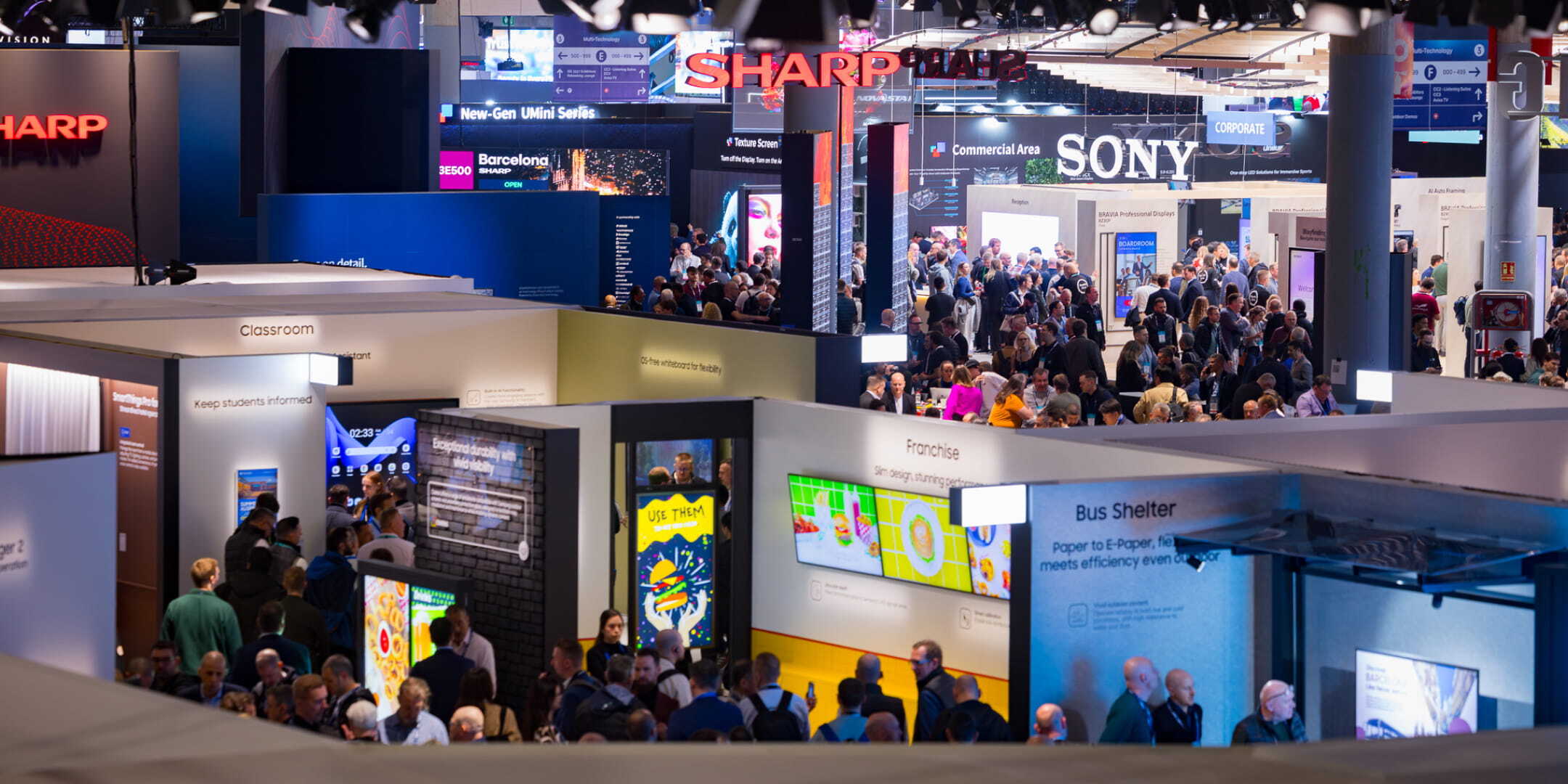
It comes as no surprise that ISE 2026 was full of new products. Over 92,000 visitors, 1,751 exhibitors, 101,000 square meters of exhibition space. Screens everywhere. Panels with better resolution, faster refresh rates, and sleeker designs.
Impressive? Sure.
Innovative? Technically.
But here's what struck me walking through hundreds of booths: this is what a mature market looks like. Everyone's iterating on the same core technologies, competing on specs rather than solving problems.
I kept asking myself: Why does this exist? What problem is this actually solving? The answers I got, or didn't get, told me everything about where workplace innovation is headed.
Innovation backwards
Don't get me wrong, hardware companies are great at hardware. That's genuinely difficult work, and they do it well. But when you ask about software integration, about use cases, about why this technology matters - that's where things get fuzzy.
Let's take a concrete example, color e-Paper displays. It looks brilliant, and technically, really impressive stuff. But here's the catch: they still need cables. They still discharge in a day or two. The promise is "sustainable" and "low power," but you're still running wires everywhere.
So what are we trying to achieve with these products? That's the question most vendors couldn't answer.
And the pattern is consistent:
- Build impressive technology
- Figure out applications later
This is innovation backwards. And the cost of this approach? Research shows 89% of large organizations pursuing digital transformation have achieved only 31% of anticipated revenue gains. They're deploying technology that doesn’t address their problems.
So how should innovation actually look?
Why "just a simple solution" becomes a huge innovation
This year, we launched our ePaper badges at ISE. And people were genuinely excited. We had visitors coming to our booth specifically to see them. So why did it resonate?
Because it solved a real problem nobody was addressing. Most businesses are striving towards sustainability, yet every company with a visitor management system has hooked a printer to it. And the ugly reality is that 70% of office waste is paper, with visitor badges being a big contributor to this.
Nobody else questioned if there was a better way.
We did.
That's purposeful innovation. Simple. Clear. Aligned with values around sustainability. People got it instantly because it answered "why does this exist?"
What innovation actually requires
And that's the hardest part of product development - actually knowing what deserves to exist.
Before building anything, these are the questions that matter:
- What problem does this solve?
- For whom?
- Why does the current solution fail?
- How will we know if this works?
- Does this align with why we exist as a company?
Most companies skip straight to "what technology can we use?" That's backwards.
At Joan, we had a moment three years ago that defined how we think about this. GPT-3 had just launched. We could see what AI was becoming. Every product company was scrambling to add AI features to everything.
We had a choice:
- Option 1: Add AI features to our products like everyone else.
- Option 2: Wait until we understand how AI can actually address workplace challenges.
We chose option 2.
We spent three years watching, learning, and understanding where this was actually going. While everyone else was building AI dashboards and AI-powered analytics that nobody asked for, we were figuring out the right question.
That patience is paying off now.
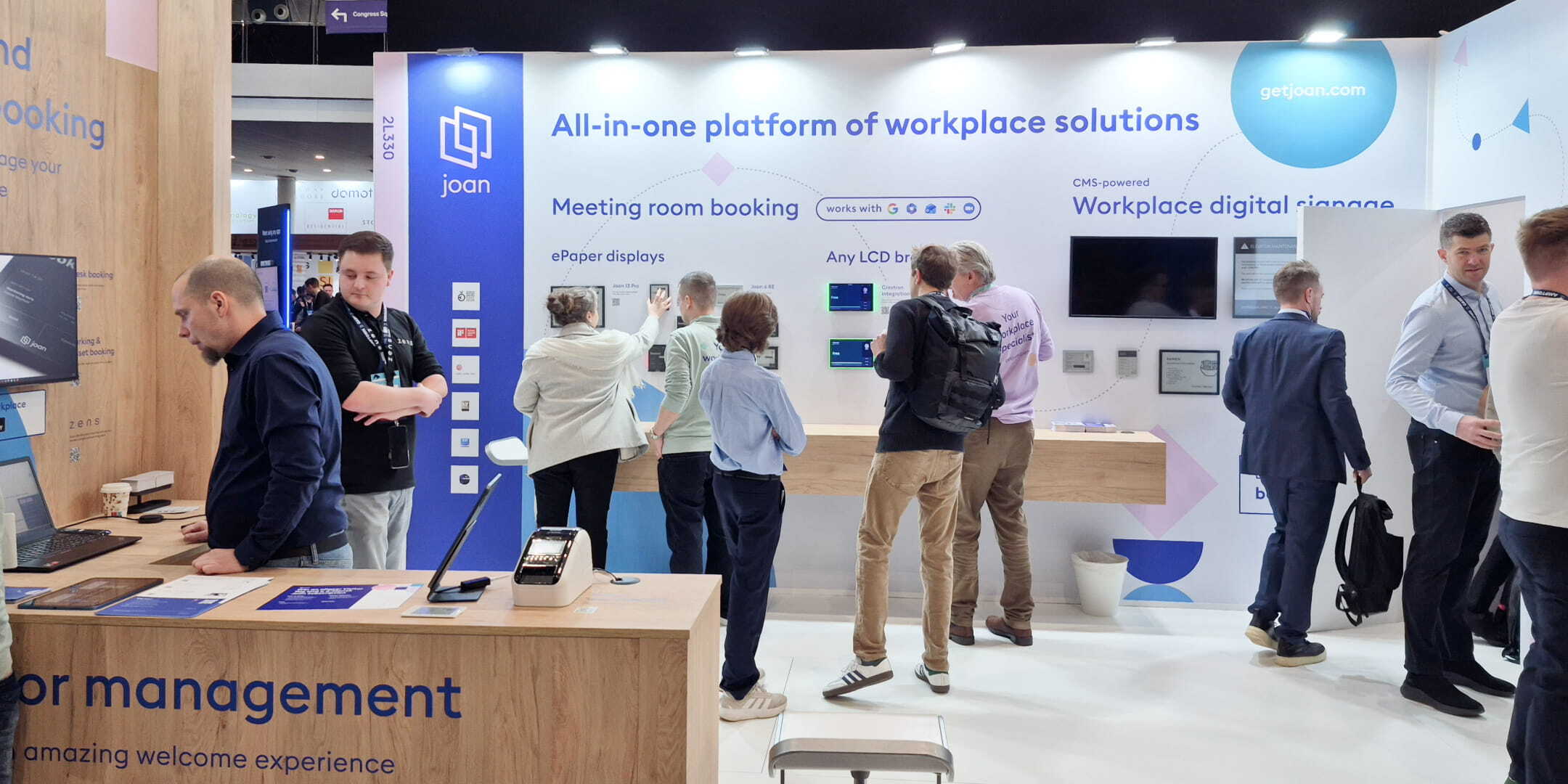
So now that we're back from ISE, what's next?
That brings us back to ISE and what we saw happening across the industry.
Large format screens, small format displays, everywhere in between. The technology works. What companies still haven't figured out is what to do with it that justifies the cost and complexity.
Workplace sensorics are becoming more accessible. Air quality monitoring, humidity sensors, noise level tracking - this stuff has been around for a while, but it's finally getting priced and packaged in ways that make sense for mid-market companies. The sensors work. The data is real.
Every meeting room will have a screen. This is basically done. Sharp, Samsung, Philips, Optoma, Jabra - everyone's shipping them. If you manage workplace technology, you better have a system that knows how to handle all these screens because they're coming whether you're ready or not.
Integration is table stakes. Everybody's integrating with everybody. APIs are open. Standards are emerging. Your systems should talk to each other, and vendors know they can't get away with proprietary lock-in anymore.
The question isn't whether these trends will happen. They're already happening. The question is whether companies will use them to solve real problems or just add more complexity to their tech stack.
And that question brings us back to where we started: purposeful innovation.
What we're asking
If you're dealing with workplace friction that makes you think "there has to be a better way" - tell us about it.
Because innovation that matters doesn't start with "what can we build?" It starts with "what needs to exist?"
About the author

Insights that keep your office running smoothly
Fresh content on productivity, space management, and the future of work. Perfect for managers, admins, and busy teams.
Join thousands of workplace professionals who already read the Joan blog. Unsubscribe anytime.